Back to School Vocabulary
Take out those pencils...

: the beliefs, customs, arts, etc. of a particular social group, place, or time
“‘Iyanu’ draws from Nigerian culture and mythology and features Black characters from all strata of society, from kings and spiritual advisers to female warriors and everyday village people trying to get by.”
—Maya Phillips, The New York Times, 23 Dec. 2025
Culture is one of our website’s top lookups not only during the back-to-school season, but all year round. We define many closely related senses of culture. When someone references “popular culture,” “youth culture,” or “American culture,” to use three common examples, they are referring to the beliefs/customs/arts/etc. of a particular social group, place, or time. Culture can also be used to a particular society that has its own characteristic features of everyday existence; we use this sense when we talk about “ancient cultures” or say that “it’s important to learn about other cultures.” The oldest sense of culture in English, still in use today, referred to the cultivation of soil (the word traces back to the Latin cultura, “cultivation”).

: the use of words to express something other than and especially the opposite of the literal meaning
Why was [Italo] Calvino so loved outside Italy? I would point to the innovative language, the imagination that roamed and pushed forward, also the use of irony. In his review, Broyard maintains that Calvino’s use of irony is overvalued. I do not agree. Calvino was a master at playing with linguistic register, alternating between high and low, humor and seriousness, philosophy and fantasy, shifting from one literary genre to another.
—
Imagine you just got back from a disastrous vacation. Your flights were delayed, the rental car broke down, in rained (unseasonably) every day, and the vacation home that looked so perfect on the website turned out to be anything but. If you were to tell your friends upon returning that your unfortunate trip was “an educational experience,” you would be deploying irony, as the word is defined above. Irony is also commonly used to refer to an incongruity between the actual result of a sequence of events and the normal or expected result, as when trying to forget something leads to thinking about it even more. Literature students may want to familiarize themselves with yet another meaning of irony (often called dramatic irony), which is a literary device that creates an incongruity between what the characters know and what the audience knows, thereby giving different and often contradictory meanings to the characters’ words and actions.

: a figure of speech in which a word or phrase literally denoting one kind of object or idea is used in place of another to suggest a likeness or analogy between them (as in swimming in paperwork); broadly : figurative language
He gives an example of a metaphor: “The pharaoh’s heart had hardened to stone.”
—
A metaphor, as any poetry professor will be only too happy to tell you, is a comparison between two otherwise dissimilar things made without the words like or as, while a simile is a comparison using (usually) one of them. To wit, in Robert Burns’s poem “A Red, Red Rose,” the line “O my Luve is like a red, red rose” is a simile. In Emily Dickinson’s poem numbered 314, “‘Hope’ is the thing with feathers” is a metaphor. More broadly, metaphor can refer to figurative language, as when a writer is acknowledged for their “use of metaphor.” It can also be used synonymously with symbol as in “The author uses flight as a metaphor for freedom.”

: the study of writing or speaking as a means of communication or persuasion
As a professor of rhetoric, he will no doubt recognize the use of the rhetorical device known as “apophasis,” or making an argument while pretending not to make it.
—
Educators have been teaching the skills of eloquent speaking and writing, aka rhetoric for millennia. (The Greek word rhētorikē literally meant “art of oratory.”) But the word rhetoric is perhaps more commonly encountered in everyday 21st century use as meaning “a type or mode of language or speech,” as in “angry rhetoric” or for insincere or highfalutin language, as in “a speech full of empty rhetoric.”
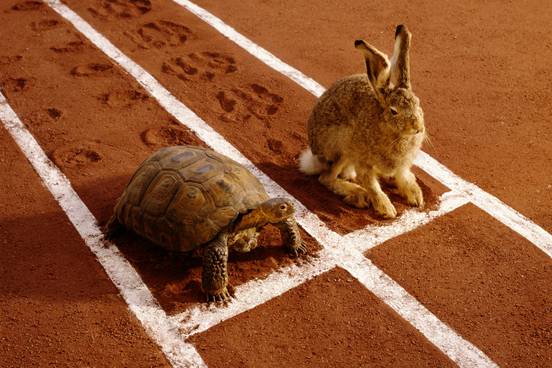
: a story in which the characters and events are symbols that stand for ideas about human life or for a political or historical situation
George Orwell didn't write “Animal Farm” to be gentle. … Orwell’s original allegory is blunt by design—a warning about the corruption of revolutionary ideals and the inevitability of tyranny when power goes unchecked.
—
Allegory refers to the expression of truths or generalizations about human existence by means of symbolic fictional figures and their actions. It encompasses such forms as fable and parable (indeed, Aesop’s famous fables are great examples of allegories). The word allegory can be traced back to the Greek verb allēgorein, meaning “to speak figuratively,” which in turn comes from allos (“other”) + -ēgorein, “to speak publicly.”

: involving or serving as an aid to learning, discovery, or problem-solving by experimental and especially trial-and-error methods
Our individual and collective experiences that will influence and shape how we think about things and that influence our behaviors. These often either reinforce a certain cognitive bias or a certain heuristic approach.
—
Heuristic methods help solve problems (as when the evaluation of feedback improves performance in a heuristic computer program). This investigative approach to problem solving is found in the ancestry of heuristic: the Greek verb heuriskein means “to discover.” Heuristic is also used as a noun for a heuristic method or procedure: a process or procedure that involves learning, discover, or problem-solving by experimental and especially trial-and-error methods.
In 1965, Toffler wrote an essay titled “The Future as a Way of Life,” in which he claimed that the rate of technological progress was leading to a kind of social illness. He dubbed this illness “future shock” … brought on by “the premature arrival of the future.” … To illustrate how, Toffler divided the previous 50,000 years of human history into 62-year lifespans, placing himself in humanity’s “800th lifetime.” We're now on the cusp of the 801st. It’s a simple heuristic, but it proves eye-opening. More than 700 lifetimes passed before humanity could write. Automobiles appeared only in the last three.
—

: a particular theory or conception of beauty or art : a particular taste for or approach to what is pleasing to the senses and especially sight
My mother was a feminist. She wore her hair in a half-inch Afro, her skull was perfectly shaped, she never wore make-up and dressed us both as plainly as possible. Hair is not essential when you look like Nefertiti. She’d no need of make-up or products or jewelry or expensive clothes, and in this way her financial circumstances, her politics and her aesthetic were all perfectly—conveniently—matched.
—
Aesthetic has roots in a Greek verb meaning “to perceive, take notice of, understand.” In its plural form, aesthetics refers to a branch of philosophy that deals with the nature of beauty, art, and taste and with the creation and appreciation of beauty, or to the beautiful qualities of something, as in “they appreciated the aesthetics of the gemstones.”

: the state or practice of including people of different races (see race entry 1 sense 1a), cultures, etc. in a group or organization
… pledged $50 million to overhaul its corporate culture and promote diversity as part of an agreement to resolve allegations that it discriminated against women and people of color …
—
Diversity dates back to the 13th century with the meaning “the quality or condition of having or being composed of different elements (such as forms, types, or ideas) as in “linguistic diversity,” “diversity of opinion,” and “diversity in plant life.” The meaning highlighted above referring to inclusion of diverse people dates back to the late 1960s.
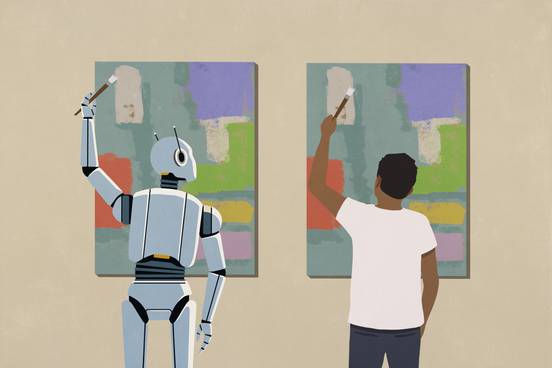
: to steal and pass off (the ideas or words of another) as one’s own : use (another’s production) without crediting the source
A growing group of authors are suing AI companies, alleging their work was used to train AI programs without payment or permission. And in December, the New York Times sued OpenAI, saying that ChatGPT was plagiarizing its news stories.
—
If schools wish to impress upon their students how serious an offense plagiarism is, they might start with an explanation of the word’s history. Plagiarize (and plagiarism) comes from the Latin plagiarius, meaning “kidnapper.” This word, which in turn comes from the Latin plaga (“a net used by hunters to catch game”), extended its meaning in Latin to refer to a person who stole the words, rather than the children, of another.

: the art, science, or profession of teaching; especially : the field of study that deals mainly with methods of teaching and learning in schools
While curriculum refers to what is taught, pedagogy is how that material is taught.
—
Pedagogical, pedagogy, and pedagogue all come from the Greek noun paidagōgos, referring to a child’s attendant or tutor. But while pedagogical and pedagogy have meanings simply related to education, teaching, or teachers (with no implied judgment), pedagogue has taken on a negative tone, often referring to a dull or overly formal teacher.