Did You Know?
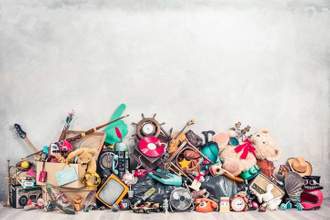
Have you ever browsed through a flea market or thrift shop? If so, chances are you’re well-acquainted with kitsch, the various bits and bobs of popular culture—fuzzy dice, plastic flamingos, cartoon-themed plastic lunchboxes, etc.—that enjoy widespread popularity but don’t hold much cultural esteem. Or maybe you’re a fan of (what some might call) cheesy movies—action movies and rom-coms that score big at the box office but are panned by critics—kitsch often applies to them, too, as well as to “lowbrow” art of all kinds. English users borrowed kitsch in the early 20th century from German; according to scholars the word was popularized by Munich painters and art dealers in the 1860s and 1870s who used it to refer to popular and cheap artwork. The word’s earlier origins are found in the German verb kitschen, meaning “to slap something (such as a work of art) together” as well as “to scrape up mud from the street.” Despite these muddy origins and the disapproving tone with which kitsch is often deployed, kitsch is not quite the “dirty” word it once was—kitsch today is as likely to be celebrated as it is to be derided.
 Daily Challenge