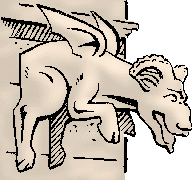
In the 12th century, St. Bernard of Clairvaux reportedly complained about the new sculptures in the cloisters where he lived. "Surely," he is quoted as saying, "if we do not blush for such absurdities we should at least regret what we have spent on them." St. Bernard was apparently provoked by the grotesque figures designed to drain rainwater from buildings. By the 13th century, those figures were being called gargoyles, a name that came to Middle English from the Old French word gargoule. The stone beasts likely earned that name because of the water that gargled out of their throats and mouths; the word gargoule is imitative in origin.
Examples of gargoyle in a Sentence
Recent Examples on the Web
Examples are automatically compiled from online sources to
show current usage.Read More
Opinions expressed in the examples do not represent those of Merriam-Webster or its editors.
Send us feedback.
Created by Weisman, the original Walt Disney Television Animation series, which aired from 1994-1997, revolved around nocturnal creatures known as gargoyles that turn to stone during the day.—
Denise Petski,
Deadline,
31 Aug. 2026 The gargoyles decide to claim New York as their new home and vow to protect it.—
Ethan Shanfeld,
Variety,
31 Aug. 2026 Haunted Mansion props on the parade floats will include the conservatory casket, cryptic gravestones, gargoyle candleholders, watchful busts, haunted armor and stretching room portraits.—
Brady MacDonald,
Oc Register,
18 Aug. 2026 The basilica's heights are bursting with nature, from the rooster who crowed while Peter denied Christ to reptiles doing the job of gargoyles, and piles of fruit that crown its spires.—ABC News,
9 June 2026 See All Example Sentences for gargoyle
Word History
Etymology
Middle English gargule, gargoyl, from Old French gargoule